


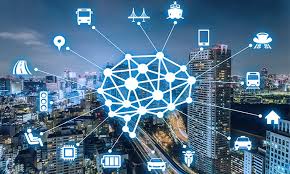
Multimodal AI refers to artificial intelligence models that can process and understand multiple types of inputs simultaneously.
Traditional AI models typically focus on a single data modality—for example, GPT-4 primarily processes text, while DALL·E generates images. However, multimodal AI models can take in diverse inputs, such as:
- Text: Natural language processing (NLP) models interpret and generate written content.
- Images: Computer vision models analyze and recognize objects in pictures.
- Audio: AI can process speech and sound for voice recognition and music generation.
- Video: AI can analyze motion, context, and objects within moving visuals.
By integrating these modalities, AI can generate richer and more contextually aware responses, making interactions more seamless and intuitive.
Multimodal AI relies on large-scale machine learning models trained on diverse datasets containing different types of inputs. The key components of multimodal AI include:
- Cross-Modal Learning: AI models learn relationships between different data types. For example, a model may learn how specific words correlate with certain images.
- Fusion Techniques: Methods like feature-level fusion and decision-level fusion allow AI to combine different modalities for a more accurate understanding.
- Transformer Architectures: Advanced transformer models, such as OpenAI’s GPT-4 and Google’s Gemini, can handle multiple input types at once.
- Pretraining on Multimodal Data: AI models are exposed to vast datasets that contain paired text, images, and audio to improve their ability to understand complex interactions.

Leave a Reply