


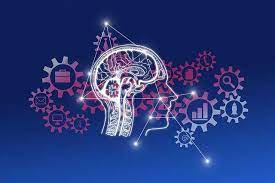
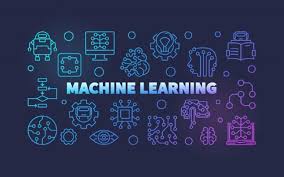
Machine Learning (ML) and Deep Learning (DL) are two major branches of Artificial Intelligence, often used interchangeably, but they differ significantly in how they operate and their applications.
Machine Learning focuses on creating algorithms that learn from data to make predictions or decisions. It uses structured data and requires manual feature extraction to identify the relevant input parameters. Deep Learning, on the other hand, is a subset of ML that uses neural networks to mimic the functioning of the human brain.
Unlike ML, DL automatically extracts features from raw data, making it particularly powerful for complex tasks like image recognition, natural language processing, and autonomous vehicles. While ML is ideal for simpler tasks such as predictive analytics and classification, DL is better suited for handling large datasets and unstructured data, as seen in applications like facial recognition or language translation.
The computational power required for DL is significantly higher than ML, making it resource-intensive but incredibly precise. Choosing between ML and DL depends on the complexity of the problem and the availability of data and computational resources.
| Aspect | Machine Learning | Deep Learning |
|---|---|---|
| Data Requirements | Small to medium datasets | Large datasets |
| Feature Engineering | Manual | Automatic |
| Processing Power | Moderate | High (requires GPUs/TPUs) |





Leave a Reply