


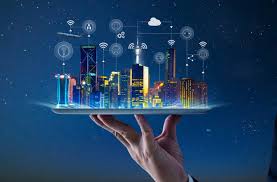
Unlike its predecessors, 5G offers ultra-fast speeds, extremely low latency, and the ability to connect billions of devices simultaneously. This enhanced connectivity is crucial for the growth of smart cities, where everything from traffic lights to public services will rely on real-time data exchange.
Ultra-Fast Connectivity and Real-Time Data Processing
One of the biggest advantages of 5G in urban environments is its ability to process data in real time. This means that traffic systems, surveillance cameras, and emergency response networks can function without delays. Smart cities will leverage this technology to improve road safety, reduce congestion, and make automated decisions based on real-time analytics.
How 5G Enhances Public Safety and Traffic Management
5G-powered smart cities will redefine public safety through AI-driven surveillance and predictive policing. Advanced video analytics, supported by 5G connectivity, will allow law enforcement agencies to detect threats instantly. Similarly, smart traffic lights and autonomous vehicles will communicate with each other to optimize traffic flow, reducing congestion and improving road safety.
Smart Grids and IoT Integration for Efficient Energy Use
Smart cities also require smarter energy management. 5G enables better integration of IoT-powered smart grids, allowing real-time energy distribution and monitoring. Utility companies will be able to predict and manage electricity consumption more efficiently, reducing power outages and lowering overall energy costs for citizens.
The Role of 5G in Smart Healthcare and Emergency Response
5G will revolutionize healthcare by enabling real-time remote consultations, robotic surgeries, and AI-assisted diagnostics. In emergency situations, ambulances equipped with 5G can send patient data to hospitals before arrival, allowing doctors to prepare in advance. Telemedicine will also see exponential growth, making healthcare more accessible, especially in remote areas.
Challenges in Deploying 5G in Urban Environments
Despite its many benefits, deploying 5G in smart cities comes with challenges. Infrastructure development, high costs, and concerns over data security and privacy remain major roadblocks. Governments and telecom providers must work together to ensure a seamless transition to 5G-powered urban environments while addressing cybersecurity threats.
Future Trends: 6G and Beyond in Smart City Development
As smart cities become more dependent on 5G, researchers are already looking ahead to 6G, which promises even faster speeds and more advanced AI capabilities. The future of urban living will be defined by hyper-connected ecosystems where artificial intelligence, automation, and 6G connectivity will work together to create the ultimate smart city experience.






Leave a Reply