


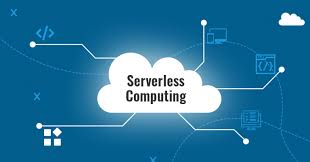
Serverless computing, also known as Function-as-a-Service (FaaS), is a cloud computing model that abstracts away the need to manage servers and infrastructure.
In a serverless environment, developers focus solely on writing and deploying functions, while the cloud provider automatically handles the execution, scaling, and management of the underlying infrastructure. This eliminates the complexity of provisioning, maintaining, and scaling servers, allowing companies to focus more on delivering business value rather than worrying about server management.
One of the key benefits of serverless computing is its cost-effectiveness, as users only pay for the actual compute time consumed by their functions, rather than paying for idle server capacity. It also offers greater scalability, with the ability to automatically scale up or down based on demand. Popular serverless platforms like AWS Lambda, Google Cloud Functions, and Azure Functions have made it easier for businesses to build scalable applications without the overhead of managing servers.
Serverless computing is particularly well-suited for event-driven applications, such as real-time data processing, APIs, and microservices architectures. As businesses continue to adopt serverless computing, they are able to streamline operations, reduce costs, and accelerate the delivery of new features and services.
However, while serverless computing offers many advantages, it also introduces new challenges related to monitoring, debugging, and vendor lock-in that organizations need to address. Nonetheless, serverless is a powerful paradigm that is reshaping the way modern applications are built and deployed.












Leave a Reply