


While NVIDIA AI benefits from specialized hardware and cloud-based solutions, DeepSeek AI relies heavily on open-source community contributions. Similarly, OpenAI’s GPT models have access to vast training datasets and infrastructure, giving them an edge in producing human-like responses with greater accuracy. Google DeepMind’s AI research, driven by Alphabet’s extensive resources, enables groundbreaking innovations in AI ethics, self-learning systems, and reinforcement learning.
Despite these challenges, DeepSeek AI has successfully carved a niche by focusing on code-centric AI solutions and enabling open-source collaboration, making it an attractive choice for developers seeking alternatives to proprietary AI.
Another area where DeepSeek AI differentiates itself is in AI-assisted software development. While OpenAI’s Codex and DeepMind’s AlphaCode have made strides in AI-generated programming assistance, DeepSeek AI offers competitive performance in code understanding, generation, and debugging. Developers can leverage DeepSeek’s models for automated software engineering tasks, making it an essential tool in modern software development workflows.
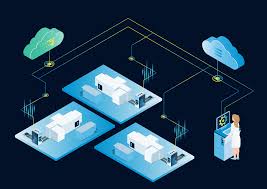
Meanwhile, NVIDIA AI’s focus on edge computing and AI-powered hardware acceleration makes it indispensable for AI-driven applications requiring high computational efficiency, such as robotics, medical imaging, and autonomous systems. DeepMind, on the other hand, continues to push the boundaries of AI-driven scientific discovery, demonstrating AI’s potential beyond traditional machine learning applications.
In conclusion, DeepSeek AI, NVIDIA AI, OpenAI, and Google DeepMind represent different facets of the AI revolution. DeepSeek AI champions open-source AI innovation, NVIDIA AI powers AI infrastructure with hardware acceleration, OpenAI leads in conversational AI, and Google DeepMind pioneers AGI and reinforcement learning. Each has its unique strengths, and the future of AI will likely be shaped by the interplay between open-source accessibility, cutting-edge research, and high-performance AI infrastructure.










Leave a Reply