


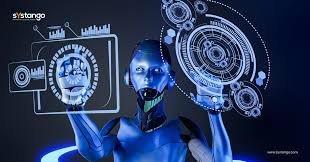
Unlike traditional AI chatbots that rely on direct human input.
AI agents are autonomous systems capable of:
- Understanding Goals
- Planning & Executing Tasks
- Making Decisions Without Constant Human Supervision
AI agents are an emerging trend in artificial intelligence, with projects like Auto-GPT, BabyAGI, and OpenAI’s GPT-4 Turbo leading the way.
How AI Agents Work
An AI agent typically follows these steps:
- Goal Identification: The user defines a task (e.g., “research the best laptop under $1,000”).
- Task Decomposition: The AI agent breaks the task into smaller steps (e.g., comparing specs, checking reviews).
- Autonomous Execution: The agent gathers data, filters relevant information, and presents a summary.
- Iteration & Refinement: AI agents can adjust their approach based on feedback, improving results over time.
Real-World Applications of AI Agents
🚀 Business Automation: AI agents can handle emails, schedule meetings, and manage workflows.
🔍 Research & Data Analysis: AI can scan thousands of documents to find key insights.
👨💻 Coding & Software Development: AI agents can generate code, debug issues, and optimize performance.
Challenges & Ethical Concerns
While AI agents are promising, they also introduce challenges:
- Autonomy vs. Control: Who is responsible if an AI agent makes a mistake?
- Security Risks: Fully autonomous agents interacting with external systems could be exploited by hackers.
- Bias & Decision-Making: AI agents need transparency in their decision-making processes to avoid biases.












Leave a Reply