



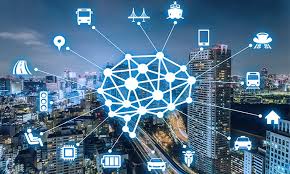
However, Edge AI is shifting intelligence directly onto devices, enabling real-time decision-making with minimal latency. This shift is crucial for applications in autonomous vehicles, smart IoT devices, and healthcare monitoring systems.
Key Technologies Powering Edge AI
Edge AI relies on specialized hardware like AI accelerators, Tensor Processing Units (TPUs), and Neuromorphic Chips to perform complex computations locally. TinyML, a subset of Edge AI, enables ultra-efficient machine learning on microcontrollers, making AI more accessible for battery-powered devices. Federated Learning further enhances privacy by allowing models to train locally without transmitting sensitive data to the cloud.
Future Prospects and Challenges
As 5G networks expand, Edge AI will gain wider adoption in areas like real-time video processing, AI-powered smart assistants, and industrial automation. However, challenges such as energy efficiency, hardware limitations, and security vulnerabilities must be addressed for broader deployment. Innovations in AI model compression and adaptive learning techniques will further optimize Edge AI performance.





Leave a Reply